In our ongoing mission to make maths accessible and achievable for every student, the formula for progress remains clear:
Consistency + Quality First Teaching + Culture = Progress.
While these elements benefit all learners, for students with Special Educational Needs and Disabilities (SEND), finding the right strategies is even more critical. One of the most powerful, evidence-backed tools in our arsenal is retrieval practice.
This isn’t just another starter activity; it’s a strategic approach rooted in cognitive science that can be transformative for students with SEND.
The Challenge: Overcoming the Cognitive Load
For students with SEND, the “Forgetting Curve” can represent a particularly steep hill to climb. This concept, developed by Hermann Ebbinghaus, describes how memory retention declines over time. While this is a universal human trait, the rate of forgetting can be more pronounced for individuals with SEND due to factors like differences in cognitive processing and memory capacity. For some students, this may result in a faster decline in retention compared to their peers.
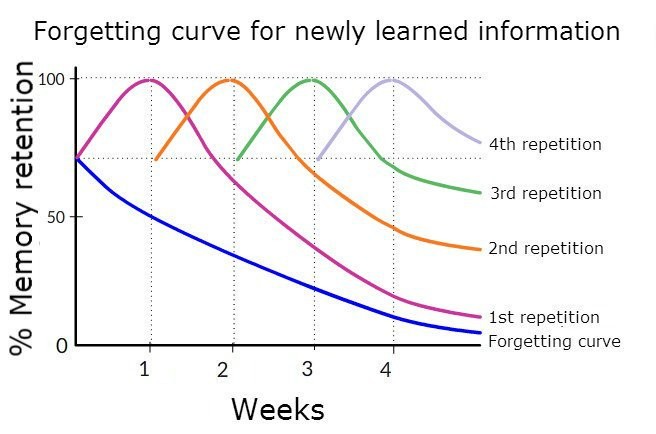
When foundational knowledge like number facts isn’t secure, this rapid forgetting drastically increases a student’s cognitive load when they are asked to tackle new, more complex concepts. Instead of having foundational skills readily accessible, their working memory becomes overwhelmed with the dual task of trying to retrieve insecure prior knowledge while also attempting to process the new material. It is important to note, however, that the impact is not uniform and varies depending on the type and severity of an individual’s needs. If prior learning isn’t regularly revisited and embedded, this process creates a shaky foundation that not only hinders academic progress but can also lead to significant maths anxiety.
Retrieval Practice: A Targeted Solution
Retrieval practice is the simple, active process of recalling information from memory. Far from being a high-pressure test, it’s a low-stakes learning strategy that strengthens the neural pathways for that information, making it more durable and easier to access in the future.
The evidence for its effectiveness is robust, and critically, it shows particular promise for learners who need the most support. Research has indicated that retrieval practice can boost learning for diverse student groups, including those with SEND.
The National Association for Special Educational Needs (nasen) highlights its specific relevance, stating that “Evidence…indicates that the use of retrieval practice can be particularly beneficial for pupils whose working memory capacity is known to be lower than average – this makes it all the more important for us to use it”.
For students with specific maths learning difficulties, a common challenge is the slow and effortful retrieval of basic maths facts. By providing structured opportunities to practice recalling this information, we help build the automaticity they need to free up mental space for higher-order problem-solving.
Making it Work in the Inclusive Maths Classroom
While the “why” is clear, the “how” is crucial. Purposeful design is everything. The goal is to build confidence and make connections, not to create anxiety.
Here are some evidence-informed considerations for using retrieval practice with SEND students:
- Keep it Low-Stakes: The EEF stresses that retrieval is a learning tool, not an assessment. As nasen advises, it is “sensible to limit the amount of quizzes or tests that pupils receive, particularly pupils with SEND” to avoid anxiety. Using mini-whiteboards, paired discussions, or untimed brain dumps are excellent low-stakes methods.
- Scaffold for Success: The aim is for a “desirable difficulty” – a manageable challenge that makes students think, but doesn’t lead to frustration. You must have a “good knowledge of the pupil’s current understanding, so that retrieval practice can be pitched appropriately”. Start with questions you know they can succeed with before building up the challenge.
- Be Purposeful: Like in the examples from the original presentation, retrieval questions should be deliberately chosen to activate the specific prior knowledge needed for the upcoming lesson. For a lesson on the surface area of a cuboid, you might ask: “How many faces does a cuboid have?” or “What is the formula for the area of a rectangle?”. This primes the brain for new learning.
- Provide Feedback: The process of recalling is what matters most, but feedback is essential to ensure students aren’t embedding misconceptions. This can be as simple as going through the answers as a class immediately after the retrieval activity.
By thoughtfully embedding retrieval practice into our lessons, we provide a powerful and equitable tool that directly addresses the challenges many SEND students face in maths. We interrupt the process of forgetting, strengthen foundational knowledge, and ultimately, free our students up to engage with the rich, challenging, and rewarding aspects of mathematics.
Designing with Purpose: From Prior Knowledge to Future Success
The power of retrieval starters lies in their purposeful design. They are deliberately crafted to activate the prior knowledge essential for the new concepts being introduced in the lesson. For instance, if the lesson objective is to write the nth term of a sequence, the starter questions should probe students’ understanding of continuing patterns, describing rules, and working backwards. Below is an example of what this could look like and why each question is being used.
1. Continue the Pattern: What are the next three numbers in the following sequence?4, 7, 10, 13, __, __, __
(This checks if students can identify and continue a simple linear pattern.)
2. Describe the Rule: Look at this sequence: 11, 16, 21, 26, 31. How do you get from one term to the next?
(This assesses their ability to articulate the term-to-term rule or common difference.)
3. Finding a Specific Term: A sequence starts at 2 and has a rule of “add 5” to get to the next term. What is the 5th term in this sequence?
(This probes whether students understand the relationship between a term’s value and its position in the sequence.)
4. Working Backwards: The third term in a sequence is 12. If the rule is “add 3” to get to the next term, what was the first term?
(This tests their understanding of inverse operations, a key concept for linking the term-to-term rule to the starting point.)
5. Spot the Difference: Which of these sequences does not follow the same type of rule as the others? Explain why. a) 5, 9, 13, 17b) 20, 17, 14, 11c) 2, 4, 8, 16d) -3, 0, 3, 6
(This challenges students to differentiate between arithmetic (additive) and non-arithmetic (in this case, geometric/multiplicative) sequences, solidifying the concept of a common difference.)
Similarly, a lesson on solving linear equations would begin with questions on simplifying expressions, inverse operations, and expanding brackets.
This targeted approach not only prepares students for the lesson but also paves the way for greater stretch and challenge. When foundational knowledge is readily accessible, it reduces the cognitive load on students, freeing up their working memory to engage with more complex problems. A starter on the area of rectangles and algebraic expressions can directly lead to a challenging lesson where students must form and solve equations from area problems.
A Call to Action: Plan for Progress
Retrieval practice is a potent, evidence-backed tool that should be a staple in every maths lesson to ensure that all students can be successful and achieve their potential. By planning five purposeful retrieval questions for every lesson, teachers can activate prior knowledge, free up cognitive load, and enable deeper engagement with stretch and challenge activities. The success or struggle students have with these starters can even inform immediate differentiation strategies for the main lesson.
So, the next time you plan a lesson, consider how your starter can explicitly pave the way for a specific stretch and challenge opportunity. It’s a small change that promises significant progress.

