Consider these two scenarios:
Scenario one
A disadvantaged student walks into a lesson late and misses the explanations of the work as these were on some PowerPoint slides.
Scenario two
A disadvantaged student finds writing difficult and struggles to copy work quickly down from a PowerPoint slide, and the notes in the book are patchy and incomplete.
Both scenarios lead to the student struggling to complete any classwork from that lesson. In Japan and China, they do not have interactive whiteboards within their classrooms but instead have huge blackboard’s. Teachers spend much time thinking about the information that goes onto the board and stays and which information gets erased. In Shanghai, they call this Bansho, which means the art of board work.
So how can Bansho help disadvantaged students? Researching into Bansho, the use of the interactive whiteboard has decreased during lessons. Bansho has had a positive effect on the teaching and learning of all students but a more significant effect on those from disadvantaged backgrounds. There are two large whiteboards within my teaching room, next to the interactive board; while planning lessons, I am now conscientious of how these boards enhance students’ progress.
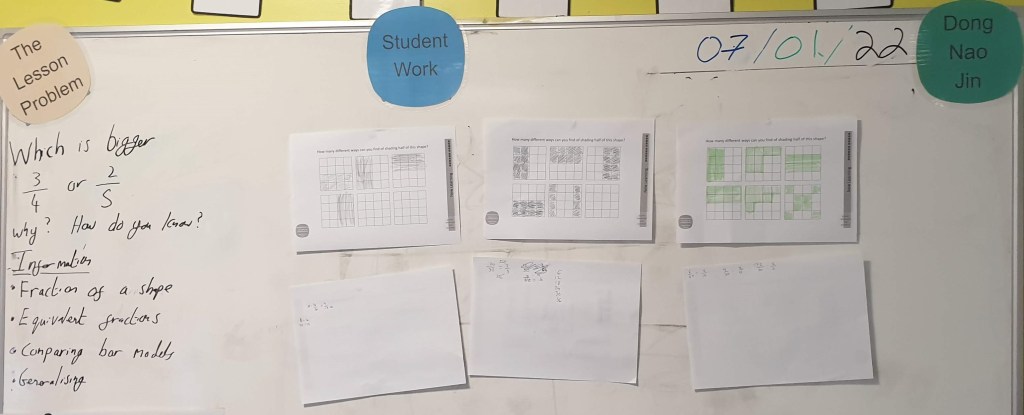
The first board dedicates space to the “Lesson Problem” and the students work. The “Lesson Problem” forms the title for the lesson and highlights what mathematical skills the students need to solve this, more on this in a later post. The majority of the board shows students thoughts and ideas as they develop the mathematical skills required.
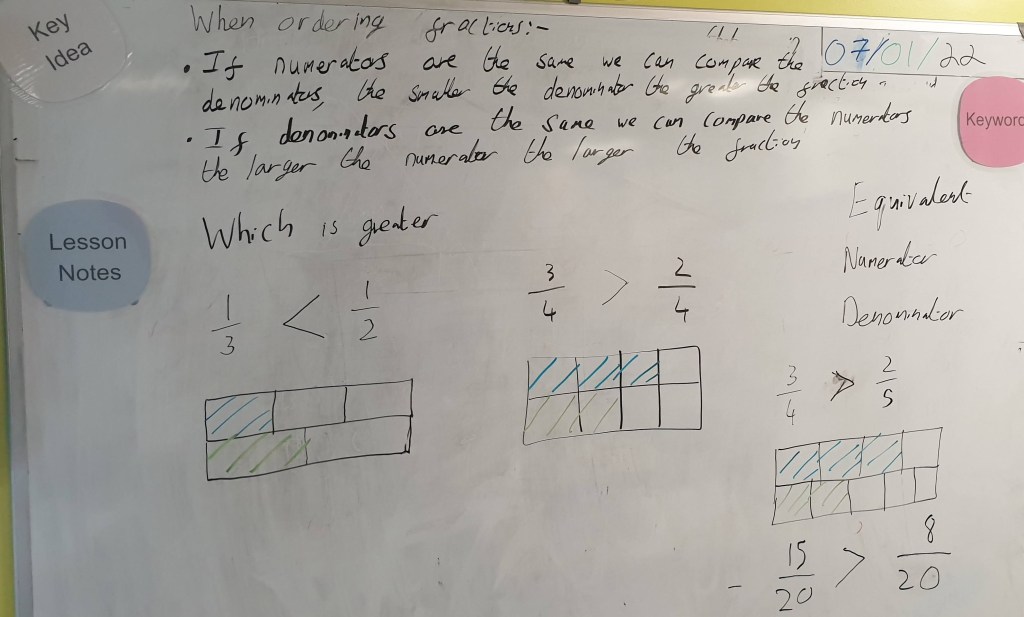
The second board focuses on work that will not be erased, such as critical ideas, keywords and notes. Work on this board does get erased.
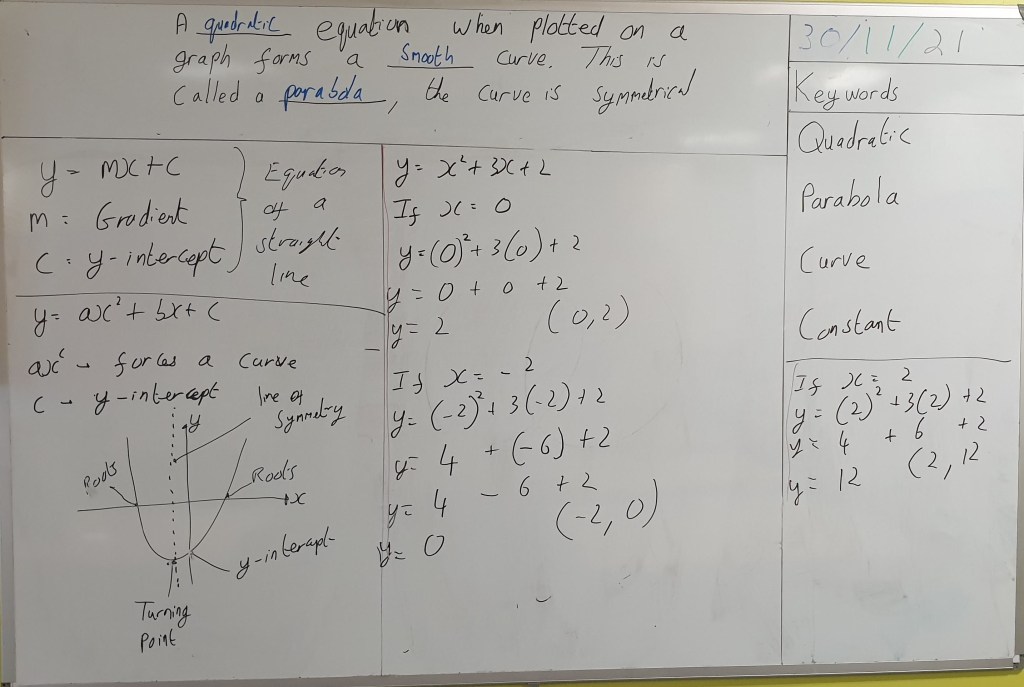
Having a dedicated space to write class notes that stay for the whole lesson means that any student who arrives late or struggles to copy work down quickly has access to the notes of the lesson for the entire duration lesson. Bansho also helps show the students how to write efficient notes even though this is a large whiteboard, carefully thinking about what will be written on this board that is meaningful and help the students to learn.
Is this just good teaching? Yes and No. It is about using the board as a tool that will help all students within the room progress and being very deliberate about what information you want them to see consistently and the specific order they see this in. For each lesson, a “Bansho Planning Sheet” is used, which helps to think about what the students work on board one will be and the specific learning points that will enhance the learning. If it is not written down on the sheet, it does not go on the second board.
It is good practice to take pictures of the board after the lesson to analyse and think was anything missed out? Were the learning points specific? Could the students progress fully with the notes given? With this information, future lessons are then amended and improved.
Within my practice, this has changed the culture of my classroom; students across all attainments are more focused as they are not being bombarded with information overload; this has led to those more challenging students focusing and enjoying learning, disadvantaged students being able to keep up with the learning, books are neater as they are not rushing to get down notes.
 Shiftingthecurve